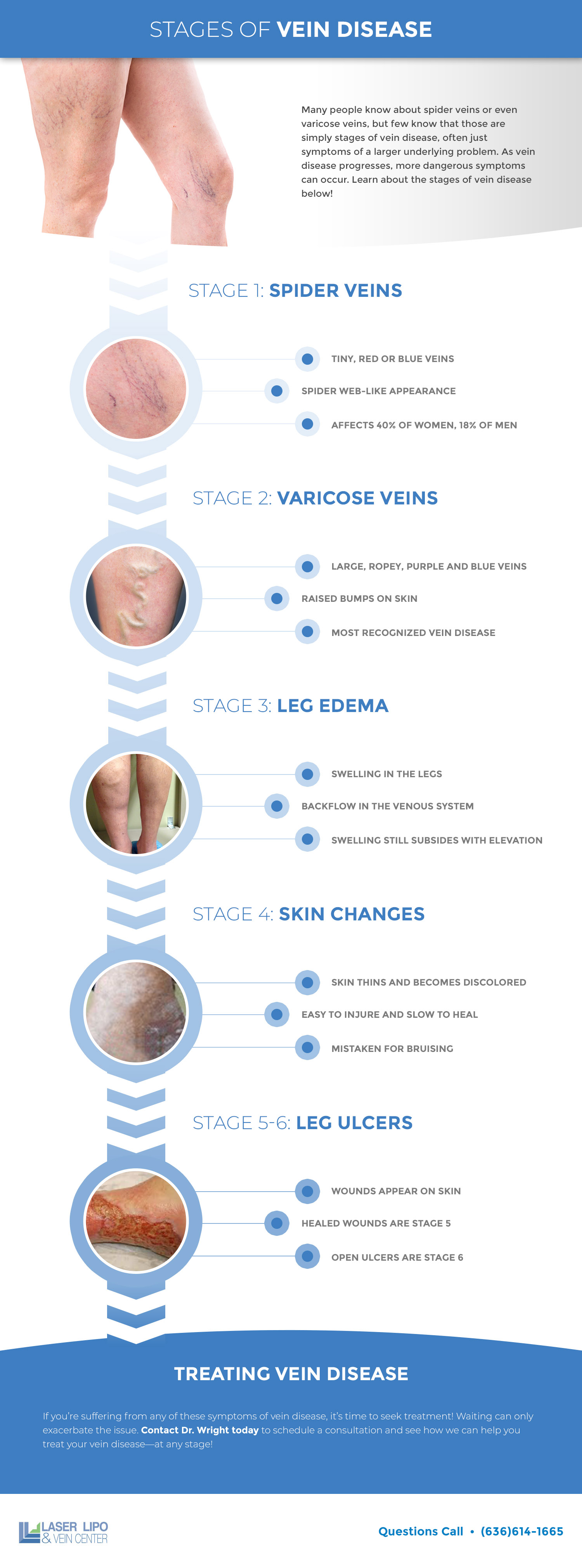

Like other medical conditions vein disease is identified through a variety of stages depending on how far it has progressed. It is important for your medical provider to continue to work with you on what stage of vein disease you are experiencing and be recommended proper treatments. Here is what you need to know about the various stages of vein disease:
Stage 1 – Spider Veins
Vein disease often begins mildly with you experiencing symptoms that are not life threatening or painful. Often times you will begin to notice spider veins develop across your legs. This symptom is only aesthetic and will not impact your health initially. Spider veins also tend to be one of the most common conditions of vein disease with approximately half of the U.S. population experiencing symptoms.
Stage 2 – Varicose Veins
As vein disease progresses so does the appearance of relate symptoms. This next stage can see the development of varicose veins that are different from spider veins. Varicose veins can have your legs feeling heavy and experience frequent cramping. Most individuals at this stage of vein disease report symptoms that impact their everyday activities.
Stage 3 – Leg Edema
As vein disease continues to progress you may begin to notice a backflow of fluid in the veins causing edema. The most common symptom of edema is swelling in the veins that can most easily be reduced by keeping your legs elevated. In fact, leg swelling is most commonly associated with vein disease.
Stage 4 –Skin Discoloration
At the fourth stage of vein disease you will most likely start to notice the coloration of your skin start to change. This is often seen as red or brown discoloration and will not dissipate unless treated. At this point you skin can easily be damaged and tends to heal more slowly.
Stages 5 & 6 – Leg Ulcers
The final two stages of superficial vein disease are known for their venous ulcers. Venous congestion inhibits the blood flow in our legs causing the ulcers and preventing any skin injuries from healing quickly. Stage 5 vein disease is associated with healed venous ulcers while stage 6 is associated with active ulcers. Similar to leg swelling, venous disease is the primary contributor to leg ulcers across the country.
Treatment for the Stages of Vein Disease at the Laser Lipo & Vein Center
If you have started to see any of the symptoms associated with a stage of vein disease contact the offices of the Laser Lipo & Vein Center immediately. Our highly trained staff led by Dr. Wright has treated thousands of patients for vein disease with complete patient satisfaction. Call today for your free consultation and see if we can help you with your vein disease.